
Introduction
Masgonzola is an intriguing food-related term that can easily spark curiosity because it sounds like the name of a traditional Italian cheese. However, research shows that the term does not have the same established identity or protected status as Gorgonzola. It is commonly used online to describe a creamy combination or blend inspired by mascarpone and Gorgonzola, while some websites use the word more loosely as a modern or invented expression. Understanding that distinction is important when discussing its meaning, history, ingredients, and place in contemporary food culture.
What Does Masgonzola Mean?
The simplest explanation is that Masgonzola is generally used as a name for a combination of mascarpone and Gorgonzola.
The name appears to draw its identity from the two cheeses:
- “Mas” is associated with mascarpone.
- “Gonzola” recalls Gorgonzola.
- Together, the word suggests a creamy cheese with the richness of mascarpone and the stronger character of blue-veined Gorgonzola.
There is an important qualification, though: it should not automatically be treated as the official name of a historic Italian cheese. Searches across reliable food references and the official Gorgonzola Consortium do not establish Masgonzola as a protected traditional cheese comparable to Gorgonzola PDO. The official Consortium instead recognizes Gorgonzola as a protected designation of origin cheese. (Gorgonzola DOP)
This distinction makes the term particularly interesting. It sits somewhere between a culinary description, an informal name, and a modern food expression.
The Connection Between Mascarpone and Gorgonzola
To understand why the term makes sense, it helps to look at the two cheeses behind it.
Mascarpone is famous for its soft, rich, creamy character. It is widely associated with Italian desserts, especially tiramisu, but it can also be used in savory dishes.
Gorgonzola, by contrast, is an Italian blue-veined cheese known for its distinctive flavor and creamy or firmer textures depending on the variety. The official Gorgonzola Consortium describes it as a blue-veined, creamy cheese with an intense flavor and confirms its PDO status. (Gorgonzola)
Combining the two creates an appealing contrast:
- Mascarpone contributes creaminess and richness.
- Gorgonzola contributes tanginess and depth.
- The resulting mixture can be smoother and more spreadable than Gorgonzola alone.
- The combination works particularly well in both savory and sweet preparations.
In fact, this pairing is not merely an internet invention. The official Gorgonzola Consortium publishes recipes that combine Gorgonzola PDO and mascarpone, including preparations with figs, honey, berries, nuts, and other ingredients.
Is Masgonzola a Traditional Italian Cheese?
This is where caution is needed.
There is no strong authoritative evidence that Masgonzola is an officially recognized traditional Italian cheese with its own protected designation. Gorgonzola, on the other hand, is clearly protected under the European PDO system, with detailed production requirements covering its ingredients, production area, and characteristics.
Therefore, calling Masgonzola a centuries-old protected cheese would be misleading.
A more accurate description is that the word is used in modern online food discussions to describe a mascarpone-and-Gorgonzola combination or a cheese concept inspired by those ingredients.
This matters because food names can sometimes become confused with established regional products. A creative name appearing frequently online does not automatically mean that it has an official historical or legal status.
A Brief Look at Its Culinary Background
Although the name itself does not have a clearly documented centuries-old history, the ingredients behind it have deep roots in Italian food culture.
Gorgonzola has a long association with northern Italy, particularly areas of Lombardy and Piedmont. The official Consortium notes that its tradition goes back centuries and that its production remains regulated to protect authenticity and quality.
Mascarpone is also strongly connected with northern Italian cuisine. Italy’s official tourism portal describes it as a sweet, soft cheese associated with Lombardy and notes that its name derives from the dialect term “Mascherpa,” referring to milk cream.
The modern combination of these two ingredients therefore brings together two established Italian traditions rather than representing an entirely separate ancient cheese-making tradition.
That is probably one reason the term feels convincing. Both components already have strong culinary identities.
What Does It Taste Like?
When mascarpone and Gorgonzola are combined, the flavor depends heavily on the proportions and the particular Gorgonzola used.
A preparation with more mascarpone will generally taste:
- Creamier
- Softer
- Milder
- Richer
- Less intensely blue-cheesy
A preparation containing a larger proportion of Gorgonzola can have:
- More pronounced tanginess
- Stronger savory notes
- Greater blue-cheese character
- A longer finish
This flexibility is one of the biggest advantages of the combination.
Someone who enjoys the character of blue cheese but prefers a smoother texture may find a mascarpone-Gorgonzola mixture more approachable than eating a strongly flavored blue cheese by itself.
Texture and Appearance
Texture is another reason the combination attracts attention.
Mascarpone has a naturally soft and creamy consistency. Gorgonzola can range from soft and creamy to more compact depending on the variety and maturation.
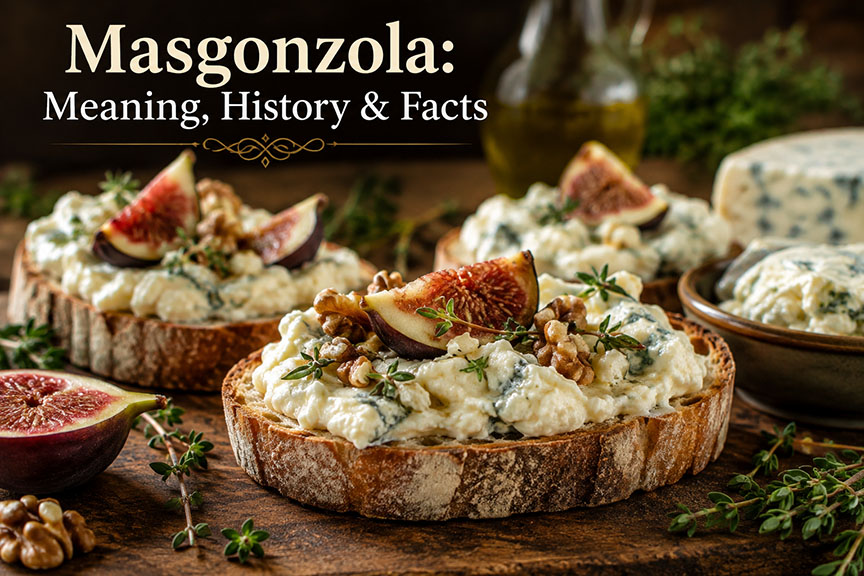
When blended together, they can produce a smooth, rich spread that works especially well on bread, crackers, crostini, and other appetizers.
The appearance may range from pale cream to a mixture containing visible blue-green veins or pieces of Gorgonzola, depending on how thoroughly the cheeses are incorporated.
For presentation, the contrast between a pale creamy base and the characteristic blue-green elements can be especially attractive on a cheese board.
How It Can Be Used in Cooking
One of the strongest reasons this combination works is its versatility.
1. Crostini and Bruschetta
Spread the creamy mixture over toasted bread and add ingredients such as:
- Figs
- Pears
- Walnuts
- Honey
- Fresh herbs
- Balsamic reduction
The sweet and savory contrast can make a simple appetizer feel considerably more sophisticated.
The official Gorgonzola Consortium itself features a recipe combining Gorgonzola and mascarpone with figs, balsamic vinegar, bread, and chives.
2. Pasta Sauces
A small amount can be incorporated into a warm pasta sauce to create richness and body.
It pairs particularly well with:
- Walnuts
- Pears
- Mushrooms
- Spinach
- Roasted vegetables
- Fresh herbs
Because both cheeses are rich, a little can go a long way.
3. Risotto
Gorgonzola is already used in northern Italian-style risotto, and mascarpone can contribute additional creaminess.
The result can be especially appealing when balanced with an acidic or slightly sweet ingredient, such as pear.
4. Cheese Boards
A creamy mascarpone-Gorgonzola preparation can provide variety on a cheese board.
Try serving it with:
- Fresh pears
- Figs
- Apples
- Walnuts
- Hazelnuts
- Rustic bread
- Crackers
- Honey
The goal is to balance the richness of the cheese with fresh, crunchy, or naturally sweet ingredients.
5. Creative Desserts
The sweet-and-savory potential should not be overlooked.
The official Gorgonzola Consortium has recipes using Gorgonzola and mascarpone with honey, berries, caramelized nuts, and even dessert-style preparations.
That demonstrates how flexible the pairing can be when the strong cheese character is carefully balanced with sweeter ingredients.
Masgonzola vs. Gorgonzola
Although the names may sound closely related, they should not be treated as the same thing.
Gorgonzola is an established Italian PDO cheese with defined production rules and a protected geographical identity.
Masgonzola is generally encountered as an informal or modern term associated with a mascarpone-and-Gorgonzola combination.
The difference can be summarized simply:
- Gorgonzola: An officially recognized Italian PDO cheese.
- Masgonzola: A modern term generally associated with combining mascarpone and Gorgonzola.
- Mascarpone: A separate soft, creamy Italian cheese.
- Gorgonzola and mascarpone mixture: A real culinary combination that can be used in numerous recipes.
This distinction helps prevent confusion when searching for the product or discussing it with food enthusiasts.
Why the Term Has Attracted Attention
Unique food names have a natural advantage online. They encourage people to search for an explanation, especially when the word resembles something familiar.
Masgonzola is a good example because the name immediately sounds connected to Italian cheese. A person who encounters it for the first time may reasonably wonder whether it is:
- A traditional cheese
- A new food trend
- A brand name
- A recipe
- A combination of existing cheeses
That uncertainty itself creates curiosity.
At the same time, the growing popularity of fusion cooking has made combinations of established ingredients more common. Modern cooks frequently experiment with familiar foods to create new textures and flavor profiles.
Important Facts to Remember
Before accepting claims about the term, keep these points in mind:
- It is strongly associated online with mascarpone and Gorgonzola.
- It should not automatically be described as an ancient or protected Italian cheese.
- Gorgonzola itself is a protected PDO product.
- Mascarpone and Gorgonzola are both established Italian foods with their own culinary histories.
- The two ingredients are officially used together in recipes published by the Gorgonzola Consortium.
- The combination can be used in appetizers, sauces, pasta, desserts, and cheese-board presentations.
- The exact flavor and texture depend on the proportions and ingredients used.
- Online descriptions should be treated carefully when they make unsupported claims about ancient origins or official recognition.
How to Approach the Term When Shopping
If you encounter the word on a menu, food blog, or product listing, do not assume that every seller means exactly the same thing.
Check the ingredient description.
Look for references to:
- Mascarpone
- Gorgonzola
- Gorgonzola Dolce
- Blue-veined cheese
- Cream cheese blends
If the description is unclear, asking the seller what ingredients are used is the easiest way to understand what you are buying.
This is especially useful because an informal food term may describe a recipe or preparation rather than a standardized cheese category.
A Better Way to Understand Its History
The most reliable way to discuss the history is to separate the history of the name from the history of the ingredients.
The name has a relatively uncertain modern history and does not have the documented protected status of Gorgonzola.
The ingredients, however, have a much stronger historical foundation.
Gorgonzola has centuries of northern Italian cheesemaking tradition behind it, while mascarpone is another important part of the culinary heritage of northern Italy. Their combination therefore has a legitimate culinary foundation even if the name itself should not be presented as an ancient cheese tradition.
This distinction makes the story more interesting rather than less.
It shows how traditional foods can inspire new combinations without requiring a newly coined term to have centuries of history behind it.
FAQs About Masgonzola
What is Masgonzola?
The term is generally used online for a creamy combination inspired by or made from mascarpone and Gorgonzola. It is not established in the same way as Gorgonzola PDO.
Is Masgonzola the same as Gorgonzola?
No. Gorgonzola is a protected Italian PDO cheese. The term Masgonzola is generally used for a modern combination involving mascarpone and Gorgonzola.
Is mascarpone and Gorgonzola a real combination?
Yes. The official Gorgonzola Consortium publishes recipes that combine the two cheeses in dishes ranging from appetizers to desserts.
What foods pair well with this cheese combination?
Figs, pears, walnuts, honey, berries, toasted bread, pasta, and risotto are all suitable options. Sweet ingredients can help balance the savory character of Gorgonzola.
Does Masgonzola have PDO status?
No reliable evidence establishes Masgonzola itself as a PDO cheese. Gorgonzola, however, is officially protected under the PDO system, with defined production requirements.
Conclusion
Masgonzola is best understood as a modern food term associated with the creamy combination of mascarpone and Gorgonzola rather than as a centuries-old protected Italian cheese. Its appeal comes from the contrast between mascarpone’s smooth richness and Gorgonzola’s distinctive blue-cheese character, while the official Gorgonzola Consortium confirms that these two ingredients are used together in a variety of recipes. For anyone researching the term, the key is to separate the informal name from the well-documented history of the cheeses behind it, allowing the culinary idea to be appreciated without making unsupported historical claims.
Read Also: Woeken Explained: A Complete Guide
